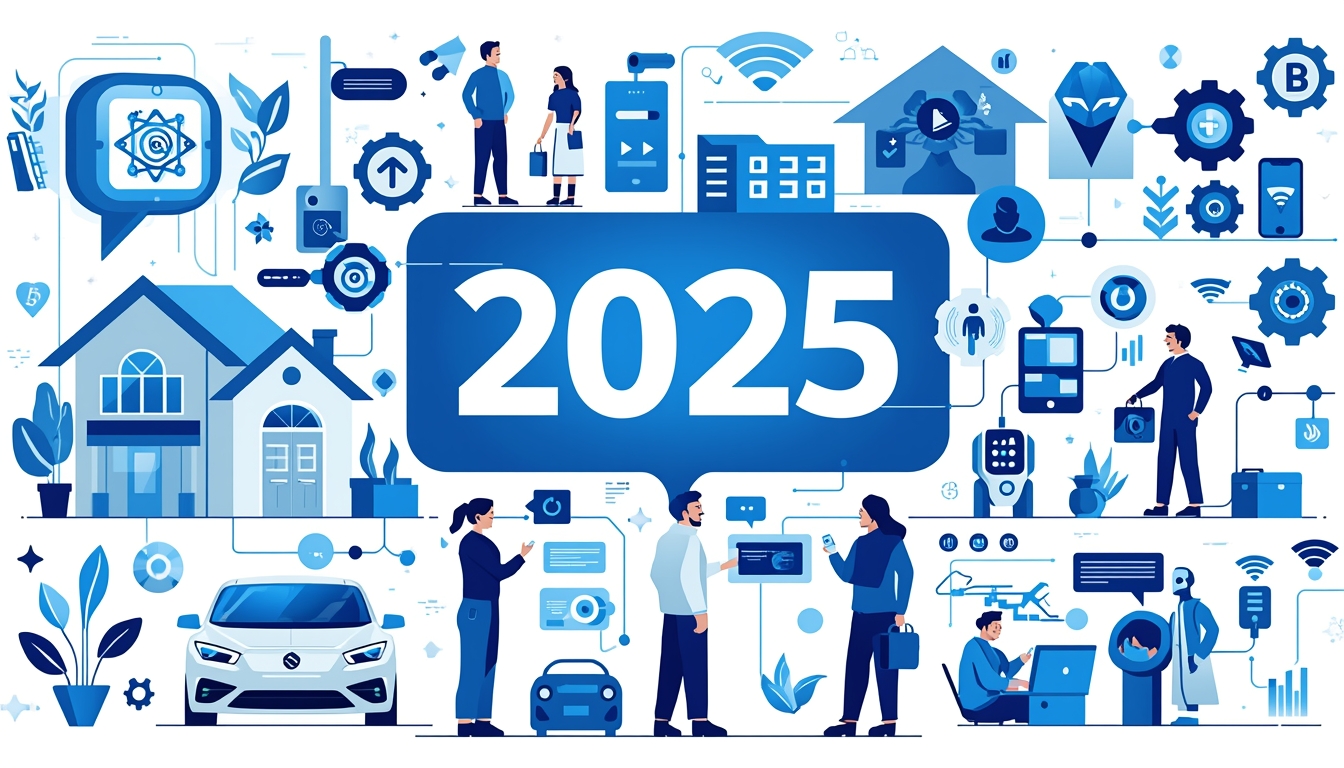
Artificial intelligence has quietly woven itself into the fabric of daily existence, transforming mundane activities in ways most people barely notice. From the moment smartphone alarms wake us with personalized timing based on sleep patterns to evening entertainment recommendations tailored to our preferences, AI touches virtually every aspect of modern life across the UK and the USA. Yet we’re only glimpsing the beginning of this transformation. The AI systems emerging in 2025 promise to reshape fundamental experiences—how we work, communicate, learn, maintain health, travel, shop, and entertain ourselves. Understanding where artificial intelligence is heading helps individuals and society prepare for changes that will be as profound as the internet revolution, touching every corner of human activity with implications both exciting and challenging.
AI in Personal Health and Wellness
Artificial intelligence is revolutionizing personal healthcare from reactive treatment toward proactive prevention and continuous monitoring. Wearable devices now track far more than steps and heart rate—they analyze sleep quality, detect irregular heart rhythms, monitor blood oxygen levels, and identify stress patterns. AI algorithms process this constant stream of biometric data, learning individual baselines and alerting users to concerning deviations that might indicate health issues requiring medical attention.
Mental health support is becoming more accessible through AI-powered applications that provide cognitive behavioral therapy techniques, meditation guidance, and mood tracking. While not replacing human therapists, these tools offer immediate support during difficult moments and help users develop coping strategies for anxiety, depression, and stress management. The stigma reduction of accessing mental health resources through private smartphone apps is bringing support to people who might never seek traditional therapy.
Nutrition and fitness coaching through AI personalizes recommendations based on individual metabolism, dietary preferences, fitness levels, and health goals. Rather than generic meal plans or workout routines, AI systems create dynamic programs that adapt as progress occurs or circumstances change, providing the personalized guidance previously available only through expensive human coaches.
Diagnostic support tools assist physicians by analyzing medical imaging, identifying patterns in patient data, and suggesting potential diagnoses based on symptoms and medical history. This augments rather than replaces medical expertise, helping doctors catch diseases earlier and make more informed treatment decisions.
Transforming How We Work
AI is fundamentally restructuring the workplace, automating routine tasks while creating new roles focused on creativity, strategy, and human connection. Virtual assistants now handle meeting scheduling, email triage, document summarization, and basic research, freeing knowledge workers to focus on complex problem-solving and relationship building.
Collaboration tools enhanced by AI translate conversations in real-time, enabling seamless communication across language barriers. Teams scattered across continents work together as if sharing the same office, with AI managing time zone complexities and ensuring asynchronous communication flows efficiently.
Recruitment and talent management leverage AI to match candidates with opportunities based on skills, experience, and cultural fit, reducing bias in hiring processes when designed thoughtfully. Performance management systems provide continuous feedback rather than annual reviews, with AI identifying skill development opportunities and suggesting personalized learning paths.
Remote work technologies continue advancing, with AI creating more immersive virtual workspaces through augmented and virtual reality integration. These environments replicate the spontaneous interactions and collaborative atmosphere of physical offices while maintaining remote work’s flexibility and accessibility benefits.
Revolutionizing Education and Learning
Personalized education becomes reality through AI tutoring systems that adapt to individual learning styles, pace, and knowledge gaps. Students receive customized explanations, practice problems targeting their specific weaknesses, and encouragement calibrated to maintain motivation without causing frustration or boredom.
Language learning applications use AI to create conversational practice that mimics real-world interactions, providing immediate pronunciation feedback and adapting difficulty based on proficiency. The barrier to learning foreign languages continues to lower as AI makes practice accessible anytime without requiring human conversation partners.
Educational content creation leverages AI to develop interactive lessons, generate practice questions, and create personalized study guides. Teachers spend less time on administrative tasks and content preparation, focusing instead on mentorship, inspiration, and addressing individual student needs that require human empathy and understanding.
Accessibility improvements through AI bring education to learners with disabilities through automatic captioning, text-to-speech, image description, and content simplification that makes complex material understandable to diverse cognitive abilities.
Enhancing Home and Daily Living
Smart home systems orchestrated by AI are moving beyond simple automation toward genuinely intelligent environments that anticipate needs and preferences. Climate control adjusts not just to scheduled times but to weather patterns, occupancy, and even individual room preferences as family members move throughout homes.
Energy management through AI optimizes electricity usage, shifting consumption to off-peak hours, managing solar panel output and battery storage, and even selling excess power back to the grid during high-demand periods. This reduces costs while supporting more sustainable energy systems.
Home security evolves with AI, distinguishing between family members, expected visitors, and potential threats. Systems learn normal household patterns, alerting residents to unusual activity while avoiding false alarms from pets or routine deliveries.
Household management becomes streamlined as AI tracks inventory, suggests shopping lists, coordinates grocery deliveries, and even recommends recipes based on available ingredients and household preferences while minimizing food waste.
Transforming Transportation
Autonomous vehicles are gradually appearing on roads across the UK and the USA, initially in controlled environments like dedicated lanes or specific routes, expanding as technology and regulations evolve. While fully autonomous personal vehicles remain years away from widespread adoption, AI-assisted driving features like adaptive cruise control, lane keeping, and automatic parking are becoming standard.
Public transportation optimization through AI improves route planning, reduces wait times, and manages capacity based on real-time demand patterns. Commuters receive accurate arrival predictions and alternative route suggestions when disruptions occur, making public transit more reliable and appealing.
Traffic management systems use AI to optimize signal timing, manage congestion, and predict traffic patterns, reducing commute times and emissions. Cities become more navigable as intelligent transportation infrastructure communicates with vehicles and travelers’ devices.
Personalizing Entertainment and Media
Content recommendation systems grow increasingly sophisticated, understanding not just what you’ve watched but your mood, viewing context, and evolving preferences. Streaming platforms suggest content that introduces you to new genres and creators while respecting your established tastes, striking a balance between familiar comfort and discovery.
Gaming experiences incorporate AI that creates dynamic storylines, adapts difficulty in real-time, and even generates unique content, ensuring no two playthroughs feel identical. Non-player characters behave more realistically, responding to player actions with nuanced reactions that blur lines between programmed behavior and genuine intelligence.
Creative tools empowered by AI assist musicians, writers, and artists by generating ideas, suggesting improvements, and handling technical aspects of creation. This democratizes creative expression, allowing people without formal training to produce professional-quality work while giving experienced creators powerful tools that amplify their skills.
Shopping and Financial Management
Retail experiences transform through AI-powered personalization that recommends products matching individual style, needs, and budget. Virtual try-on technology using augmented reality and AI ensures purchases fit and suit personal preferences before ordering, reducing returns and increasing satisfaction.
Financial planning tools analyze spending patterns, identify saving opportunities, and provide personalized investment advice, once available only through expensive financial advisors. AI helps individuals build wealth through informed decisions tailored to their risk tolerance, goals, and life circumstances.
Fraud detection protects consumers through AI systems that identify suspicious transactions instantly, blocking unauthorized purchases before they complete, while minimizing false positives that inconvenience legitimate shopping.
Navigating the AI-Integrated Future
Artificial intelligence in 2025 is not a distant promise but a present reality touching every aspect of daily life across the UK, USA, and globally. From healthcare and work to education, home management, transportation, entertainment, and shopping, AI enhances human capabilities while raising important questions about privacy, bias, job displacement, and maintaining human agency. The future isn’t about AI replacing human experience but augmenting it—handling routine tasks, providing personalized insights, and enabling us to focus on what makes us distinctly human: creativity, empathy, complex judgment, and meaningful connection. As AI continues evolving, individuals who understand its capabilities and limitations while maintaining critical thinking about its applications will thrive in an increasingly intelligent world. The future of AI in everyday life isn’t something approaching on the horizon—it’s arriving now, reshaping existence in ways we’re only beginning to comprehend, demanding thoughtful engagement from everyone navigating this transformation.

Related Posts