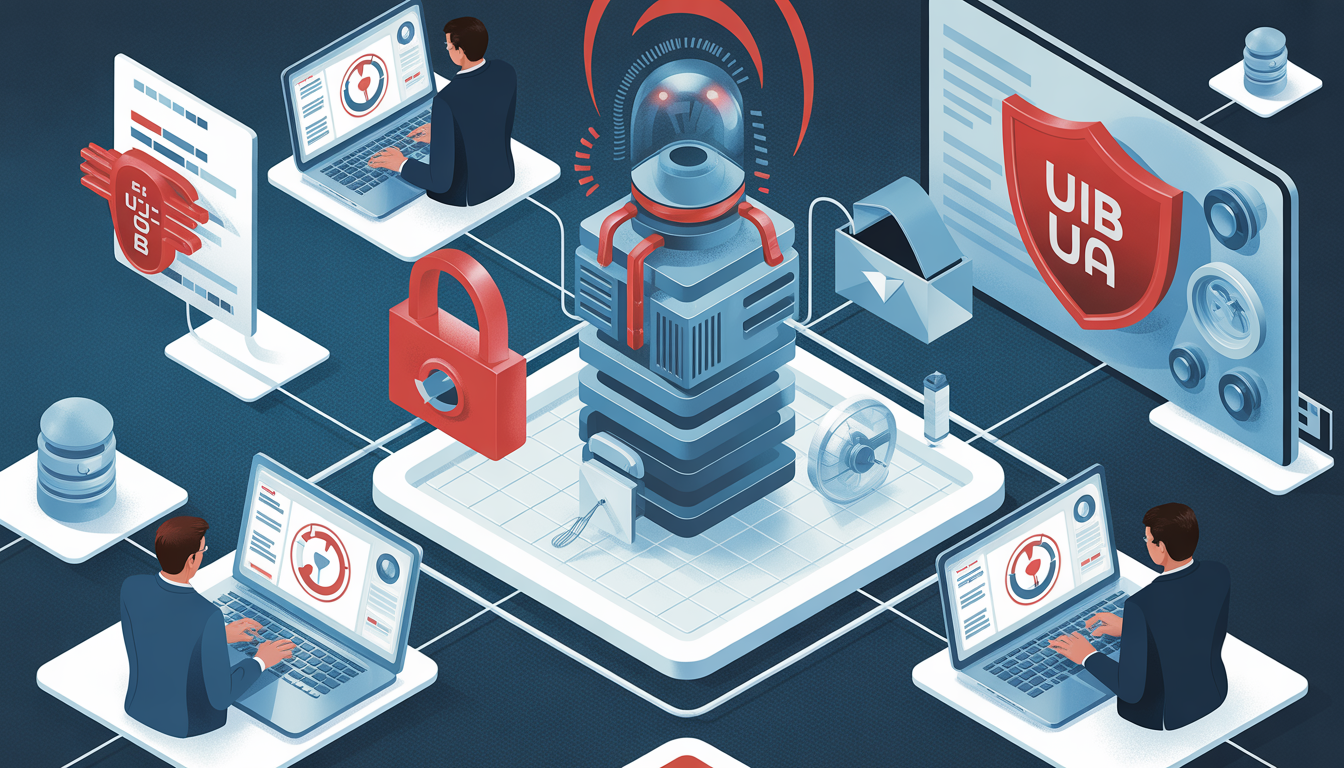
American businesses face an unprecedented cybersecurity crisis as sophisticated threat actors exploit vulnerabilities across digital infrastructure. From small startups to Fortune 500 corporations, no organization remains immune to cyberattacks that can cripple operations, drain finances, and destroy reputations built over decades. The financial impact is staggering—cybercrime costs the US economy hundreds of billions annually, with individual breaches routinely causing millions in damages. Beyond monetary losses, businesses face regulatory penalties, legal liabilities, and customer trust erosion that can prove fatal to enterprises of any size. Understanding the most significant cybersecurity threats confronting American businesses in 2025 is essential for executives, IT professionals, and anyone responsible for protecting organizational assets in an increasingly hostile digital landscape.
Ransomware Attacks: The Billion-Dollar Threat
Ransomware has evolved into the most financially damaging cybersecurity threat facing American businesses, with attacks increasing in frequency, sophistication, and ransom demands. Cybercriminals encrypt critical business data and systems, demanding substantial payments—often in cryptocurrency—for decryption keys. The average ransom payment exceeded $200,000 in recent years, not counting recovery costs, operational downtime, and reputational damage.
Healthcare organizations, educational institutions, and municipal governments represent particularly attractive targets due to the critical nature of their operations and often outdated security infrastructure. The Colonial Pipeline attack demonstrated how ransomware can disrupt essential services, forcing a major fuel supplier to shut down operations and ultimately pay a multi-million-dollar ransom.
Double extortion tactics have become standard practice, where attackers not only encrypt data but also threaten to publicly release sensitive information if ransoms aren’t paid. This compounds the damage beyond operational disruption, adding regulatory compliance violations and competitive intelligence exposure to the threat landscape.
Phishing and Social Engineering
Despite technological advances in security, human psychology remains the weakest link in organizational defenses. Phishing attacks manipulate employees into revealing credentials, downloading malware, or transferring funds through deceptive emails, messages, and phone calls that appear legitimate.
Spear phishing targets specific individuals with personalized attacks based on gathered intelligence about their roles, responsibilities, and connections. An accountant might receive what appears to be an urgent invoice from a known supplier, while an executive could get a fake message from their CEO requesting an emergency wire transfer.
Business email compromise (BEC) schemes cost American businesses billions annually. Attackers impersonate executives or vendors, instructing employees to make fraudulent payments or share sensitive information. These attacks require minimal technical sophistication but deliver massive returns through careful social engineering.
Insider Threats: Danger from Within
Not all threats originate externally—employees, contractors, and business partners with legitimate access pose significant risks through malicious intent or negligence. Disgruntled employees might steal intellectual property before departing, while careless workers inadvertently expose sensitive data through poor security practices.
Privileged user accounts with elevated access to systems and data represent particularly dangerous insider threats. A single compromised administrator account can provide attackers with keys to the entire digital kingdom, enabling data theft, system sabotage, or establishing persistent backdoors.
The challenge of insider threats lies in detection difficulty. Traditional perimeter security focuses on external attackers, while insiders already possess authorized access. Behavioral analytics and continuous monitoring help identify suspicious activity, but balancing security with employee privacy and trust remains complex.
Supply Chain Vulnerabilities
Modern businesses rely on interconnected networks of suppliers, vendors, and service providers, each representing a potential entry point for attackers. Supply chain attacks compromise trusted third parties to gain access to target organizations, as demonstrated by the SolarWinds breach that affected thousands of organizations, including government agencies.
Software supply chain attacks inject malicious code into legitimate applications during development or distribution. When businesses install these compromised updates, they unknowingly grant attackers access to their systems. The scale and stealth of these attacks make them particularly dangerous.
Cloud Security Misconfigurations
Cloud adoption has accelerated dramatically, but many organizations fail to properly configure security settings, leaving sensitive data exposed. Misconfigured cloud storage buckets have leaked customer information, financial records, and proprietary data from major corporations due to simple permission errors.
Shared responsibility models in cloud computing create confusion about security obligations. While cloud providers secure the infrastructure, customers must protect their data and applications. Gaps in understanding these divisions frequently result in vulnerabilities that attackers eagerly exploit.
Distributed Denial of Service (DDoS) Attacks
DDoS attacks overwhelm systems with traffic from multiple sources, rendering websites and services inaccessible to legitimate users. While not typically stealing data directly, these attacks cause revenue loss, damage reputations, and sometimes serve as distractions while other attacks unfold.
The proliferation of insecure IoT devices has created massive botnets that attackers harness for DDoS campaigns. These attacks have grown in scale and sophistication, with some exceeding terabits per second in volume—enough to overwhelm even well-protected networks.
Advanced Persistent Threats (APTs)
State-sponsored actors and sophisticated criminal organizations conduct APT campaigns characterized by stealth, patience, and specific objectives. Rather than quick smash-and-grab attacks, APTs establish long-term presence within networks, quietly gathering intelligence, stealing intellectual property, or positioning for future disruption.
APTs employ multiple attack vectors, sophisticated malware, and careful operational security to avoid detection for months or years. By the time organizations discover these intrusions, attackers have often accomplished their objectives and established multiple backdoors for future access.
IoT Device Vulnerabilities
The explosion of Internet of Things devices in business environments—from security cameras to smart thermostats—introduces countless weakly secured endpoints. Many IoT devices ship with default credentials, receive infrequent security updates, and lack basic protection mechanisms.
These vulnerable devices provide convenient entry points into corporate networks. Attackers who compromise a connected printer or camera can pivot to more valuable systems, using the IoT device as a launching pad for deeper network penetration.
Credential Theft and Account Takeover
Stolen credentials remain among the most common attack vectors, obtained through data breaches, phishing campaigns, or credential stuffing attacks that exploit password reuse across services. Once attackers possess legitimate credentials, they blend in with normal traffic, making detection extremely difficult.
Multi-factor authentication significantly reduces credential theft, yet adoption remains inconsistent across American businesses. Many organizations still rely solely on passwords despite overwhelming evidence of their inadequacy.
Zero-Day Exploits
Vulnerabilities unknown to software vendors—zero-day exploits—give attackers windows of opportunity before patches become available. These exploits command premium prices in underground markets, reflecting their power to bypass all existing defenses.
While less common than attacks exploiting known vulnerabilities, zero-days pose existential threats when deployed against high-value targets. Organizations cannot patch vulnerabilities they don’t know exist, making defense particularly challenging.
AI-Powered Attacks
Artificial intelligence is weaponizing cyberattacks, enabling more convincing phishing messages, automated vulnerability discovery, and adaptive malware that modifies itself to evade detection. As AI tools become more accessible, the barrier to launching sophisticated attacks continues to lower.
Deepfake technology creates hyper-realistic audio and video impersonations used in social engineering attacks. An executive’s voice might be cloned to authorize fraudulent transactions, or fake video conferences could manipulate employees into revealing sensitive information.
Building Resilient Defenses
The cybersecurity threat landscape confronting American businesses in 2025 is complex, evolving, and relentless. From ransomware and phishing to insider threats and supply chain compromises, organizations face attacks from multiple directions requiring comprehensive, layered defense strategies. Success demands more than technology investments—it requires security-conscious culture, employee training, incident response planning, and executive commitment to making cybersecurity a business priority rather than an IT afterthought. No organization can eliminate all risk, but understanding these top threats enables businesses to allocate resources effectively, implement appropriate controls, and build resilience that allows operations to continue even when—not if—attacks occur. The question facing every American business isn’t whether they’ll be targeted, but whether they’ll be prepared when attackers inevitably come knocking.
